
Slab, frame and roof under one contractor: what that means on a Brazos Valley build
What changes when one company holds the slab, the frame, the roof and the finish on a garage, patio cover or addition, and what to ask before you sign.
By EV Roofing & Construction
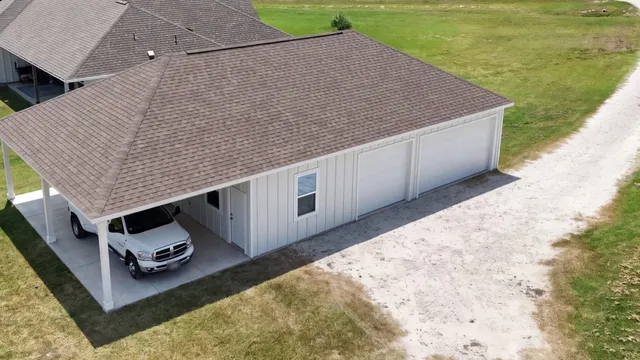
When one contractor holds the slab, the frame, the roof and the finish, you get one contract, one written scope, one schedule and one company that answers for every joint between those trades. That is the whole idea, and it matters most on exactly the projects homeowners in Bryan and College Station ask about most often: a detached garage, a covered patio, a shop, an addition.
Hire those trades separately and the job still gets built, but you become the general contractor. You book the concrete company around the framer’s calendar, you decide whether the slab is right for the walls, and when water shows up where the new roof meets the old one, you are the person standing between two companies who each say it was the other one.
Where projects actually go wrong: the seams
Most problems on a multi trade job do not start in the middle of anyone’s work. They start where one trade hands off to the next.
- Slab to frame. The walls are only as square as the slab under them. If the slab was poured from a different drawing than the framer is working from, someone finds out with a tape measure, and fixing it costs time on both sides.
- Frame to roof. On an addition or a patio cover tied into a house, the new roof has to meet the existing one. That junction is where water gets in when the builder and the roofer are different companies, because the flashing belongs to whoever touched it last.
- Roof to finish. Ceilings, trim and paint go on after the roof is dried in. If the roof is late, the finish crew is idle or gone, and the schedule slides by weeks rather than days.
None of these are exotic. They are ordinary handoffs, and every one of them needs somebody whose job it is to get it right.
What changes with one company
With one contractor, those seams sit inside one scope instead of between three contracts. In practice that looks like this:
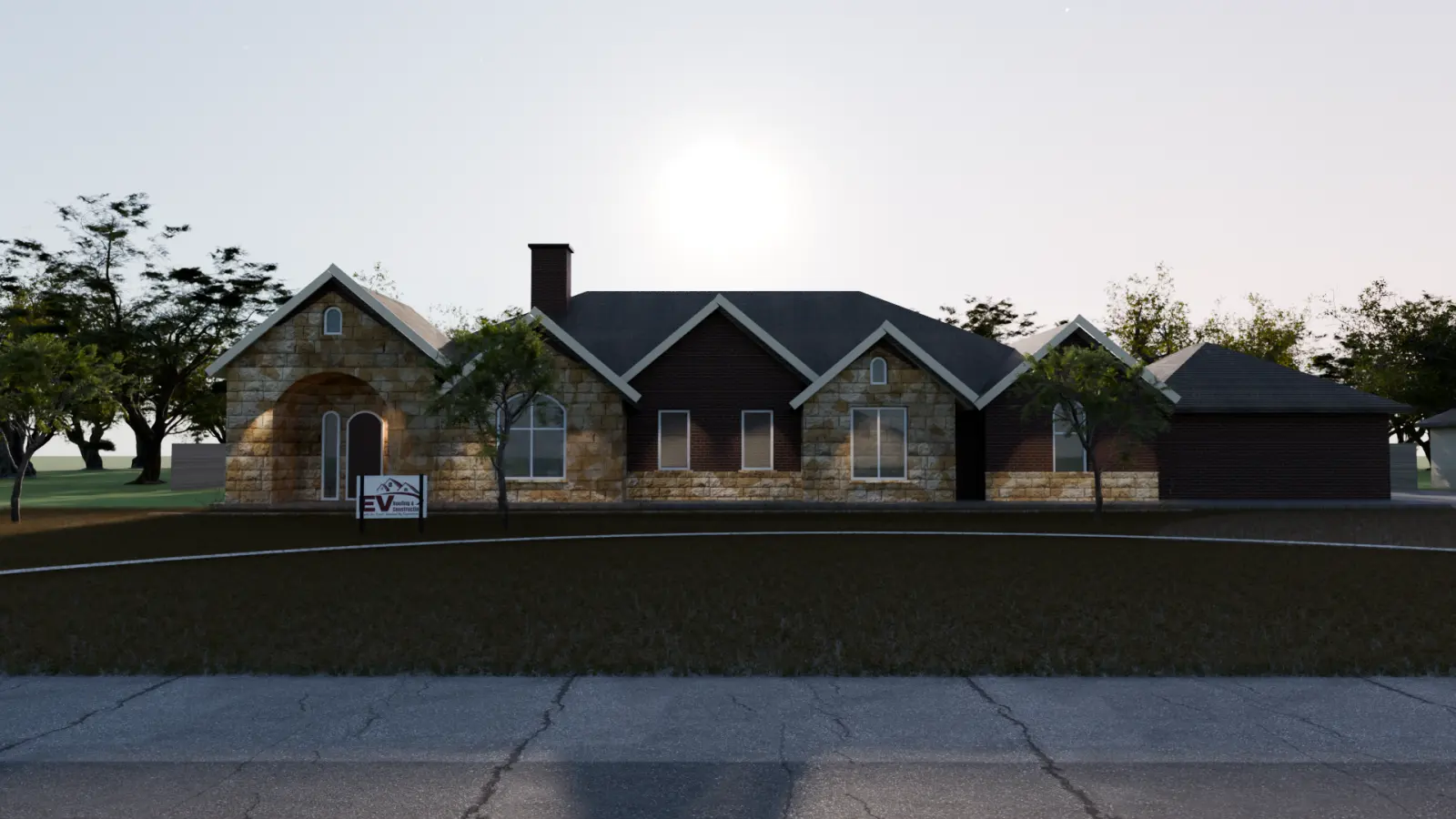
- One drawing. For a new structure we draw a concept first, showing what we propose and exactly where it lands on your property, before any price. The slab, the frame and the roof are all built from it.
- One price, written out. One number for the whole job, with the scope written out and what is included and what is not side by side, so a gap between trades shows up on paper instead of on site.
- One schedule. The trades are sequenced by the same company, so the roof follows the frame instead of waiting for another firm’s opening.
- One contact. You have one person to call about your job, and one phone number.
- One standard at the joints. When we frame a structure and roof it, the flashing, the drip edge and the tie in to any existing roof line are ours to stand behind.
What to get in writing before you sign
Whoever you hire, single source or not, these are worth having on paper before the first form board goes down.
- The scope, trade by trade. Slab, frame, roof, finish, and anything in between, such as gutters or electrical rough in. If a line is missing, ask who is doing it.
- What is excluded. The excluded list is where most surprises live. Read it as carefully as the price.
- Who obtains the permit and calls the inspections. College Station requires a permit for nearly every detached structure, and Bryan runs its permits and inspections through its own online portal. Our post on permits for detached garages, shops and carports covers the rules.
- How changes are handled. Anything outside the signed scope should be written up, priced and signed before that work starts. A verbal OK is not approval.
- The warranty, component by component. A slab, a frame and a roof are different work with different warranties. They should be set out in the bid, not described on a phone call.
- Insurance. Ask to see proof of general liability and workers compensation coverage. EV is fully insured for both.
- How the job closes. A walkthrough with you at the end, a punch list, and a closeout package with what was built, photos and the warranty as written.
When separate trades make sense
Single source is not the answer to every job, and it is fair to say so. If your project is one trade, hire the trade. A re-roof is a roofing job and a new driveway is a concrete job. The case for one contractor starts when the work crosses from one trade into the next, which on a garage, a patio cover or an addition is every step of the way.
How we do it
EV Roofing & Construction builds roofs, patios and patio covers, concrete and sitework, custom homes, detached garages, shops, carports and additions, remodels, siding and windows, and exterior restoration across Bryan, College Station and the Brazos Valley. On a structure that needs several of those, we build it in order and answer for every part of it, so you deal with one company, one written proposal and one phone number. Hablamos español, from the first call to the final walkthrough.
See how we build new construction and patio covers, or read how we work and bid. The number is (979) 406-5431, Monday to Friday, 9:00am to 5:00pm.
Questions
Call (979) 406-5431, Mon to Fri 9 to 5. Hablamos español.